Allow yourself the uncomfortable luxury of changing your mind. Cultivate that capacity for “negative capability.” We live in a culture where one of the greatest social disgraces is not having an opinion, so we often form our “opinions” based on superficial impressions or the borrowed ideas of others, without investing the time and thought that cultivating true conviction necessitates. We then go around asserting these donned opinions and clinging to them as anchors to our own reality. It’s enormously disorienting to simply say, “I don’t know.” But it’s infinitely more rewarding to understand than to be right — even if that means changing your mind about a topic, an ideology, or, above all, yourself.

Source: 9 Learnings from 9 Years of Brain Pickings – Brain Pickings
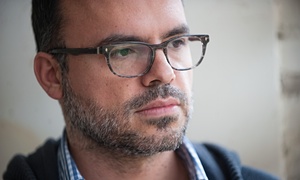
The hyperlink was my currency six years ago. It represented the open, interconnected spirit of the world wide web – a vision that started with its inventor, Tim Berners-Lee. The hyperlink was a way to abandon centralisation – all the links, lines and hierarchies – and replace them with something more distributed, a system of nodes and networks. Since I got out of jail, though, I’ve realised how much the hyperlink has been devalued, almost made obsolete. Facebook Twitter Pinterest ‘The only way to stay outside this vast apparatus of surveillance might be to go into a cave and sleep’ … Derakhshan. Photograph: Arash Ashoorinia for the GuardianNearly every social network now treats a link as just the same as it treats any other object – the same as a photo, or a piece of text. You’re encouraged to post one single hyperlink and expose it to a quasi-democratic process of liking and plussing and hearting. But links are not objects, they are relations between objects. This objectivisation has stripped hyperlinks of their immense powers.

Source: Iran’s blogfather: Facebook, Instagram and Twitter are killing the web | Technology | The Guardian

Archbishop Desmond Tutu has called for Tony Blair and George Bush to be hauled before the international criminal court in The Hague and delivered a damning critique of the physical and moral devastation caused by the Iraq war.

Tutu, a Nobel peace prize winner and hero of the anti-apartheid movement, accuses the former British and US leaders of lying about weapons of mass destruction and says the invasion left the world more destabilised and divided “than any other conflict in history”.

Writing in the Observer, Tutu also suggests the controversial US and UK-led action to oust Saddam Hussein in 2003 created the backdrop for the civil war in Syria and a possible wider Middle East conflict involving Iran.

Tony Blair and Bus should face trial over Iraq war